Before the age of digital typesetting that allowed designers to establish their own typography, the skill of "typesetting" (tracing headlines by hand in various typefaces to be copied and approved by the client) was of great importance. Miguel Reyes came across Tommy Thompson's classic 1946 manual, "How to Render Roman Letterforms", and was impressed by his renderings of Caslon, written quickly with a broad-tipped pencil. Thompson was able to modulate the weight of the stroke by twisting the pencil tip, creating unusual serifs with interlocking angled endings. Reyes considered the tension between the rough, informal quality of the rendering and the classical letterforms to be a new way of interpreting the type cut by Nicolas Jenson in Venice in the late 15th century. Nicola, elegant and bold, is a robust, low-contrast typeface whose simplified details almost make it a serif.
Nicola
ID / Record
#57
Credits
Miguel Reyes
Licensing
Público con costo
Foundry
Commercial Type
Release
2024
Classification
Texto
Class
Retail
Variants
8 Styles
Regional Node(s)
México
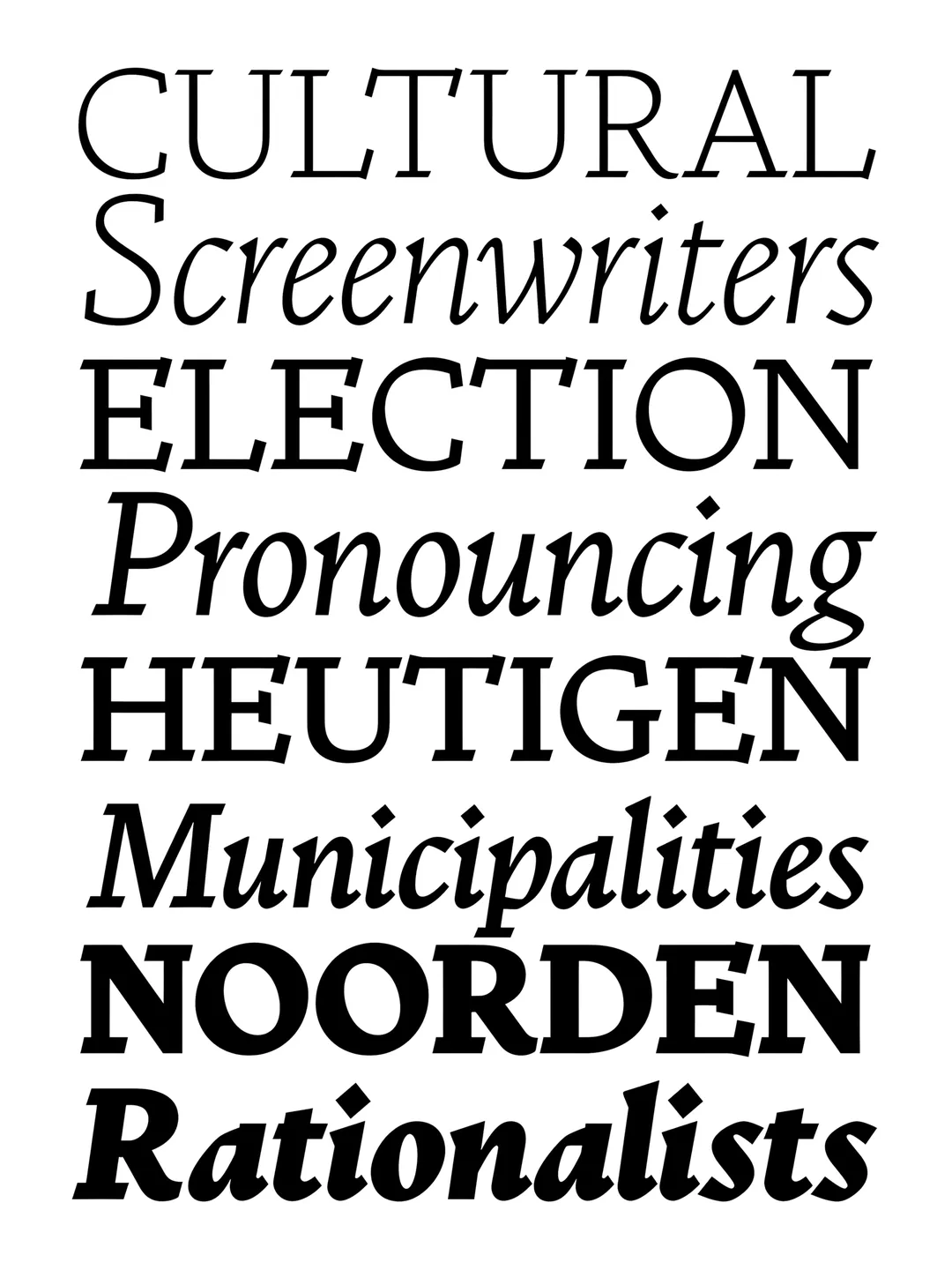
Note. Specimen of the typeface Nicola. Copyright by
Commercial Type.
RECOMMENDED CITATION
TipoMap Latam. (2026). Nicola. In Mapping of Typographic Production in Cuba (record #57). UASLP. Entry consulted at https://tipomap.lat/cu/view_typo?id=57