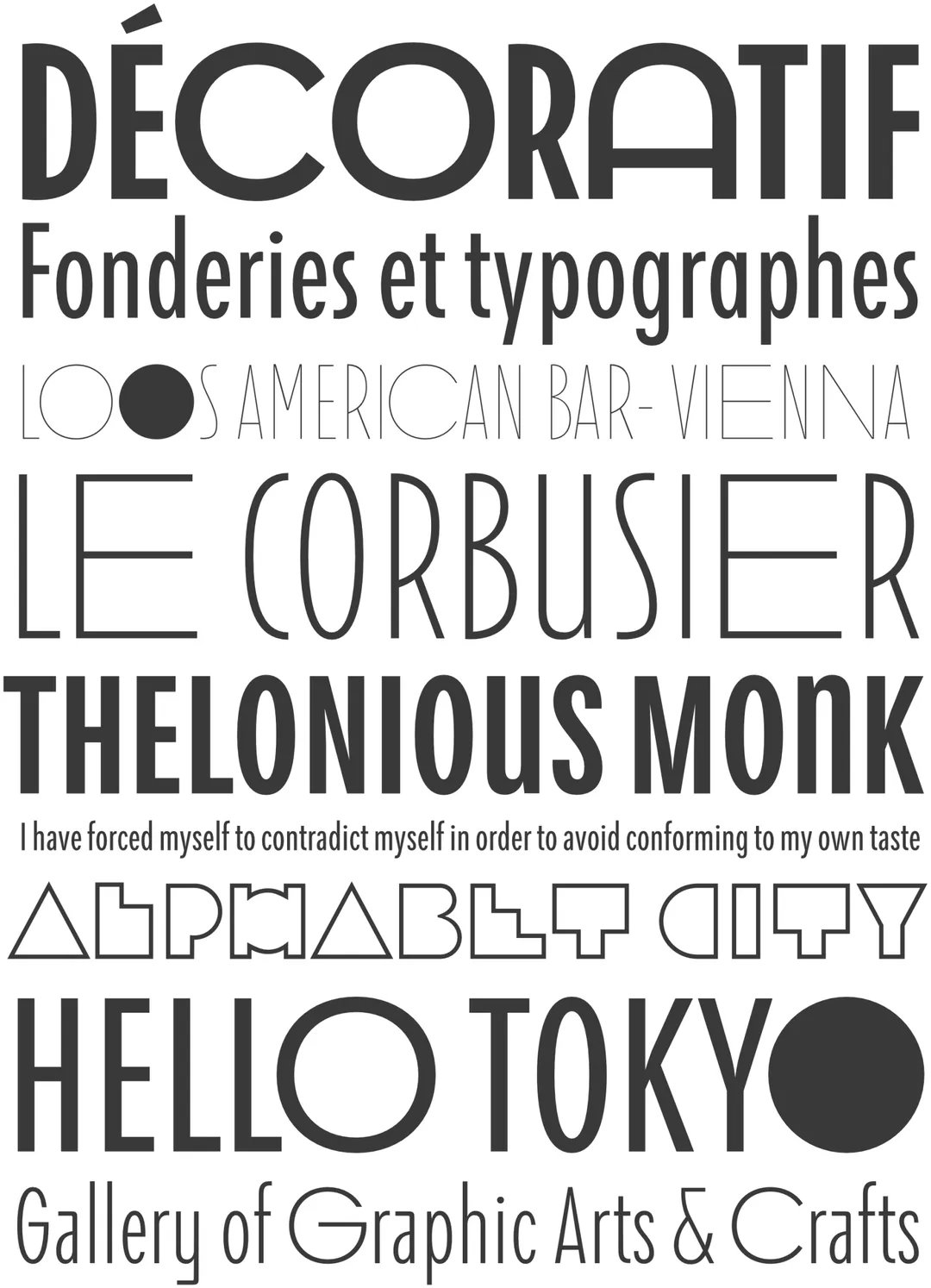
Replete Sans, developed by Sudtipos, is a sans serif typeface family conceived through a critical observation of the contemporary urban landscape. Its conceptual approach is grounded in the coexistence of multiple aesthetic and philosophical currents that shape the visual identity of major metropolises on a global scale. In this sense, the typeface draws a parallel between architecture and graphic design as systems of cultural representation.
The project acknowledges the historical overlap of 20th-century architectural styles—from Art Deco to the rationalist movements associated with the Bauhaus—whose buildings coexist as material testimonies to different ideologies and socioeconomic eras. Similarly, typography forms part of these urban landscapes, either by integrating harmoniously into the city’s visual structure or by creating formal tensions that complicate its interpretation.
Cities such as Shanghai, New York, London, Buenos Aires, and Tokyo exemplify these stylistic juxtapositions, where typographic diversity actively contributes to the construction of urban identity. Repleta Sans draws inspiration from this heterogeneity, proposing a typeface system that synthesizes grotesque, geometric, and Art Deco influences into a coherent and functional structure.
From a technical standpoint, the family consists of seven weights, accompanied by geometric alternates and formal variations that include extended widths and filled counterforms. This versatility allows for its use in both continuous text for extended reading and in expressive compositions, where the letters can be arranged as modular elements that evoke the configuration of an urban landscape.
The term “Replete”—understood to mean full, abundant, or overflowing—alludes to the project’s integrative nature: a sans serif that incorporates multiple formal traditions within a unified system. Consequently, the family presents itself as a broad-spectrum contemporary typographic tool, capable of meeting diverse design needs through a balance of functionality, stylistic diversity, and structural coherence.
Awards and Recognition
titulo